
This guide compares the main option selling strategies on Nifty with model numbers: how much each collects, how much it can lose, where it breaks even, how likely it is to finish in profit and how fast it earns. It then covers choosing strikes and expiries, where to put a stop and why percentage stops move closer every day, margin, risk controls, what SEBI's data says, where a first-time seller should start, and how to automate a selling strategy without letting it run out of control.
Option selling strategies at a glance
| Strategy | View | Credit per lot | Worst case | Suits |
|---|---|---|---|---|
| Short straddle | Stays near the current level | ₹32,994 | No limit | Experienced sellers with stops and a time exit |
| Short strangle | Stays inside a range | ₹17,128 | No limit | Range traders who want room for error |
| Iron fly | Pins near one level | ₹15,867 to ₹22,760 | ₹3,634 to ₹9,740 | Sellers who want the straddle's shape with a cap |
| Iron condor | Stays inside a range | ₹9,051 | ₹7,199 | A defined loss and a flat profit zone |
| Bull put spread | Holds above a level | ₹4,115 | ₹12,135 | A mild bullish view |
| Bear call spread | Holds below a level | ₹4,937 | ₹11,313 | A mild bearish view |
| Covered call | Holding shares, expecting a flat or slow rise | Premium on the call | The shares falling | Investors earning on a holding |
All figures use Black-Scholes model prices with Nifty at 25,000, 12 days to expiry, IV of 14% and a lot of 65.
Key takeaways
- Sellers are paid time value upfront and keep what is left when the position closes. Three things help them: time decay, falling implied volatility and the tendency of implied volatility to run above the volatility that follows.
- At fair prices selling has no built-in edge. Frequent small wins are balanced by rare large losses; the edge, if any, comes from IV being too high and from losses being cut.
- The highest chance of profit comes with the worst reward-to-risk, and hedging lowers the chance of profit while capping the loss. Every row in the comparison table trades one for the other.
- Percentage stops move closer every day. A 25% stop on a sold 25,300 call is about 98 Nifty points away with 12 days left, 56 points with 5 days left and 18 points with one day left, inside the normal daily noise.
- Margin is the exchange's minimum, not a risk limit. Size from the stop or the wings, and add a daily limit for the account.
- Option selling suits automation: fixed entry times, strikes by delta, per-leg stops, a combined stop and a time exit are all exact settings.
How option selling makes money
An option's premium has two parts. Intrinsic value is how far the option is in the money. Time value is everything else: the price of the chance that the option will be worth more before expiry. At expiry, time value is zero.
An option seller is paid that time value upfront and keeps whatever is left when the position closes. Three things work in the seller's favour:
- Time decay. Every day that passes without a large move reduces the value of the options sold. This is theta.
- Falling volatility. If implied volatility (IV) drops, option prices drop with it, even if the index does not move.
- The volatility premium. Research on index options in many markets has found that implied volatility has, on average, been higher than the volatility that actually followed. Sellers are paid for taking the risk of large moves.
Against that, the seller carries the risk that the market moves further than the premium covers. The seller's profit is capped at the premium received, while the loss on an unhedged position can be many times larger.
At fair prices, selling has no built-in edge
It is worth being precise about this. If options were priced exactly at their model value and the market behaved exactly as the model assumes, selling them would make nothing on average before costs. The frequent small wins would be balanced by the rare large losses. The edge an option seller hopes for comes from implied volatility being higher than the volatility that follows, and from managing losses well. Neither is guaranteed: the model short straddle earns about ₹1,411 a day in theta and loses about the same on an ordinary one-standard-deviation day.
How the examples work
All the numbers below use Black-Scholes model prices with Nifty at 25,000, 12 days to expiry, IV of 14%, an interest rate of 6.5% and a lot of 65 units. The "chance of profit" column is the model's probability that Nifty finishes between the breakevens at expiry, using the same 14% volatility.
Real markets move in larger jumps than the model assumes, so treat these probabilities as a way to compare strategies, not as forecasts.
Option selling strategies compared
| Strategy | Legs | Credit per lot | Maximum loss per lot | Breakevens | Model chance of profit | Theta per day |
|---|---|---|---|---|---|---|
| Short straddle | Sell 25,000 call and put | ₹32,994 | Unlimited | 24,492 and 25,508 | 57.5% | +₹1,411 |
| Short strangle | Sell 25,300 call and 24,700 put | ₹17,128 | Unlimited | 24,437 and 25,564 | 62.4% | +₹1,259 |
| Iron fly, 500-point wings | Short straddle plus 24,500 put and 25,500 call | ₹22,760 | ₹9,740 | 24,650 and 25,350 | 41.8% | +₹384 |
| Iron fly, 300-point wings | Short straddle plus 24,700 put and 25,300 call | ₹15,867 | ₹3,634 | 24,756 and 25,244 | 29.9% | +₹152 |
| Iron condor | Sell 24,750 put and 25,250 call, buy 24,500 put and 25,500 call | ₹9,051 | ₹7,199 | 24,611 and 25,389 | 45.9% | +₹278 |
| Bull put spread | Sell 24,750 put, buy 24,500 put | ₹4,115 | ₹12,135 | 24,687 | 71.5% | +₹117 |
| Bear call spread | Sell 25,250 call, buy 25,500 call | ₹4,937 | ₹11,313 | 25,326 | 67.0% | +₹160 |
Three things in this table surprise many traders:
- The highest chance of profit comes with the worst reward-to-risk. The bull put spread finishes in profit about 71% of the time in the model, but it risks ₹12,135 to make ₹4,115.
- Hedging reduces the chance of profit. Buying wings costs premium, which moves the breakevens closer to the centre. The 300-point iron fly has a capped loss of ₹3,634 but only about a 30% chance of finishing in profit.
- Strikes alone do not decide the odds. The short straddle sells the ATM strike, yet its breakevens are wider than the iron condor's because it collects so much more premium.
There is no free lunch in this table. Every strategy trades off how often it wins against how much it can lose, and the options trading strategies guide plots that trade-off for buying structures as well.
Interactive payoff chart: change the spot, IV, lot size and days to expiry to see the curve, breakevens and Greeks.
The short straddle
A short straddle sells the ATM call and the ATM put with the same strike and expiry. It collects the most premium of any strategy here and has the most time decay, but its loss is unlimited in both directions.
On one lot at 25,000, it collects ₹32,994. At expiry it makes the full credit if Nifty closes exactly at 25,000, about ₹16,744 at 24,750 or 25,250, and roughly breaks even at 24,500 or 25,500. At 24,000 or 26,000 it loses about ₹32,006, and the loss keeps growing beyond that.
Traders use it on days they expect the index to stay in a range, usually with a stop loss on each leg and a time exit. Our short straddle strategy guide covers entries, exits and adjustments in depth.
The short strangle
A short strangle sells an out-of-the-money call and an out-of-the-money put. It collects less than a straddle but gives the market more room before losses start.
On one lot, selling the 25,300 call and the 24,700 put collects ₹17,128. The position keeps the full credit anywhere between 24,700 and 25,300 at expiry. Its breakevens sit at about 24,437 and 25,564. Like the straddle, its loss is unlimited.
A strangle suits traders who expect a range but want a margin for error. Choosing strikes by delta, such as selling the options closest to a delta of 0.20, keeps the strangle's width in line with current volatility. See the short strangle strategy page for more.
The iron fly
An iron fly is a short straddle with protective wings: a bought put below and a bought call above. The wings cap the loss and cut the margin required.
With 300-point wings, the iron fly collects ₹15,867 and can lose at most ₹3,634 per lot. With 500-point wings, it collects ₹22,760 and can lose at most ₹9,740. Wider wings keep more of the straddle's premium and widen the breakevens, but raise the maximum loss.
The iron fly's profit is concentrated around the centre strike. It makes the most if the index pins near the strike at expiry, and its profit falls away quickly as the index moves.
The iron condor
An iron condor sells an out-of-the-money put and call and buys further out-of-the-money options as protection. It is a short strangle with wings.
Our example collects ₹9,051 and can lose at most ₹7,199 per lot. It keeps the full credit if Nifty finishes between 24,750 and 25,250, and breaks even at about 24,611 and 25,389.
The iron condor is popular with traders who want a defined maximum loss and a flat profit zone. Its daily decay is modest, about ₹278 per lot in our example, so it usually needs several days to earn a meaningful share of its credit. See the iron condor strategy page.
Credit spreads: bull put and bear call
A credit spread sells one option and buys a further out-of-the-money option of the same type. It is a directional or semi-directional trade with a capped loss.
- Bull put spread. Sell a put below the market and buy a lower put. It profits if the index stays above the short strike. Our example collects ₹4,115, risks ₹12,135 and breaks even at about 24,687.
- Bear call spread. Sell a call above the market and buy a higher call. It profits if the index stays below the short strike. Our example collects ₹4,937, risks ₹11,313 and breaks even at about 25,326.
Credit spreads suit traders with a mild view: not that the market will rally, but that it will not fall far, or the reverse. Their high chance of profit comes with a reward that is a fraction of the risk, so one loss can wipe out several wins.
Selling against a holding: the covered call
Not all option selling is a bet on a range. An investor who holds shares, or an index position through futures or ETFs, can sell a call above the market against it. The premium is income if the market stays below the strike; above the strike the holding is effectively sold at the strike plus the premium. The downside is the holding's own fall, cushioned only by the premium. It is the simplest form of selling and the one with the fewest moving parts, which is why it appears in investors' portfolios as often as in traders' books. The covered call strategy guide covers strike choice and rolling.
Choosing strikes
The strike decides how much premium you collect and how much room the market has. Common methods:
Distance from ATM. Sell a fixed number of points away, such as 300 points on Nifty. Simple, but it ignores volatility: 300 points is a lot of room on a calm day and very little on a volatile one.
Delta. Sell the options nearest to a chosen delta, such as 0.15 to 0.30. Delta adjusts to volatility automatically, because the same delta sits further away when IV is high.
Premium. Sell the options closest to a fixed premium, such as ₹50. Useful for keeping the credit consistent, though the distance changes with volatility and days to expiry.
Expected move. At 14% IV, Nifty's one standard deviation move over 12 days is about 635 points. Selling strikes near or beyond that distance gives the market roughly one standard deviation of room.
Open interest. Some traders look for strikes with large open interest on the Nifty option chain and treat them as support or resistance. Open interest shows where positions are concentrated, not where the market must stop, so use it as context rather than a rule.
Choosing the expiry
Since November 2024, NSE has offered weekly options only on Nifty 50, and BSE only on Sensex. Bank Nifty and FinNifty options now have monthly expiries only.
The expiry you choose changes the trade:
| Days to expiry | ATM Nifty straddle value per unit |
|---|---|
| 30 | ₹805 |
| 12 | ₹508 |
| 5 | ₹327 |
| 2 | ₹207 |
| 1 | ₹146 |
Shorter expiries decay faster in the final days but carry much higher gamma, so a move against you hurts more quickly. Longer expiries collect more premium and decay more slowly, leaving more time for the market to move and for adjustments. Many sellers avoid holding short at-the-money options into the last session, when gamma is at its highest.
Where to put the stop
A seller's stop is usually written as a rise in the sold option's premium: exit the leg if its price rises 25%, 50% or 100% above the entry. The percentage is easy to set and easy to automate, but it does not mean the same thing every day, because the premium it is a percentage of shrinks as expiry approaches.

In the model, the 25,300 call sold with 12 days left costs ₹150.11. A 25% stop is hit if Nifty rises about 98 points the same day, a 50% stop at about 183 points, which is one standard deviation, and a 100% stop at about 330 points. With five days left the same call costs ₹61.52, and the 25% stop is about 56 points away. With one day left it costs ₹4.25 and the 25% stop is about 18 points away, well inside the range Nifty covers in an ordinary hour. Three consequences follow:
- Match the stop to the days left. A 25% stop that gives a fresh weekly position room is a noise trigger on expiry day. Many sellers widen the percentage, or switch to a stop in index points, as expiry approaches.
- Use a combined stop as well. Per-leg stops protect against one side running; a stop on the position's total loss, or a daily MTM limit for the account, protects against the slow bleed when both legs are tested in turn.
- A stop is a trigger, not a price. After a gap, the exit can fill far beyond the level. Hedged structures keep the worst case known even when the stop fails; naked ones do not.
Margin for option sellers
Selling options requires margin, because the potential loss is large. The amount depends on the full combination of legs.
- Naked positions need the most margin. A short straddle or strangle has unlimited risk, so exchanges require a large deposit.
- Hedges reduce margin. Buying wings defines the maximum loss, which can cut the margin sharply. That is a major reason traders prefer iron flies and condors to naked positions.
- Expiry day costs more. Since November 2024, SEBI's framework has added an extra 2% extreme loss margin on short index options on expiry day, and from February 2025 the margin benefit for calendar spreads is removed on the expiry day of the near contract.
- Premiums are collected upfront. Brokers collect the option premium from buyers upfront, and sellers must meet margin before the order is accepted.
Check the margin for any combination with the F&O margin calculator before you trade. Size positions by the loss you can accept, not by how many lots your margin allows.
Managing risk as an option seller
Option selling rewards discipline and punishes hope. These rules matter more than strike selection.
Size by maximum loss
Decide the most you are willing to lose on a trade and on a day, then size the position so a stop loss or the wings keep the loss inside that limit. If a short straddle's combined stop would cost ₹6,000 per lot and your limit is ₹15,000, trade two lots, not three. The position size calculator helps with this.
Use stop losses on every leg
A per-leg stop exits one option when its price rises by a set amount above the entry premium. A combined stop exits the whole position when its total loss reaches a limit. Many sellers use both, along with a daily MTM limit for the account. Set the percentage with the days to expiry in mind, as the section above shows.
Respect the event calendar
RBI policy days, the Union Budget, election results and major global data can move the market sharply. Many sellers skip those days or reduce size.
Avoid concentration
Two short straddles on Nifty and Sensex are not two independent bets. The indices move together, so a sharp rally hurts both at once. Add up the Greeks of everything you hold.
Plan adjustments in advance
When the market moves toward one side, sellers often roll the untested side closer to collect more premium, buy a wing to cap the loss, or close the position and re-enter at the new ATM strike. Each adjustment costs charges and can lock in a loss, so decide the rules before the trade and test them.
Know when not to sell
Selling cheap premium in a calm market leaves little room for error. Selling ahead of a known event takes gap risk. Checking IV helps you judge whether the premium on offer is worth the risk.
What SEBI's data says
SEBI's August 2026 study of individual traders in equity derivatives found that 87.7% made net losses in FY26 and that options accounted for about 92% of their losses. Most individual traders were buyers, but option selling is not immune: the strategies that win most often are also the ones that can lose the most in a single session.
The lesson is not that option selling cannot work, but that it only works with strict sizing, exits that are followed every time and costs that are counted honestly.
Option selling for beginners: where to start
Option selling for beginners means defined-risk structures first, and small size. The sequence that keeps the lessons cheap:
- Learn the mechanics on a credit spread. A bull put spread or bear call spread has two legs, a known worst case and a modest margin, and shows how time decay and a tested short strike feel in a live account.
- Move to an iron condor or iron fly once a few expiries of spreads have gone to plan. Four legs, still a capped loss, and the first taste of managing both sides.
- Leave naked straddles and strangles for later, if at all. Their losses have no ceiling, their margin is several times a hedged structure's, and SEBI's expiry-day margin adds to it.
- Write the exits before the entry: the per-leg stop, the combined stop, the daily limit and the time exit, with the days to expiry in mind.
- Paper trade the rules for several expiries and compare fills with the model; short option fills slip more than long ones in fast markets.
- Size so that two full losses in a week do not change your plans. With ₹5 lakh and a 2% daily limit, that is ₹10,000 a day across every strategy running.
If options themselves are new, start with the option trading for beginners guide, which covers the account, the first bought trade and the first three months, before coming back to the selling side.
Automating an option selling strategy
Option selling suits automation because its rules are precise and its exits must be fast. A typical automated rule set:
- Instrument and expiry: Nifty 50, current weekly expiry.
- Entry: 9:20 am, only if IV is above a chosen level and no major event is scheduled.
- Legs: sell the ATM call and put, or the options nearest to a 0.20 delta for a strangle.
- Wings: buy protective options a set distance away to define the maximum loss, and place them first.
- Per-leg stop: exit any leg whose premium rises 25% to 50% above entry, widened as expiry approaches.
- Combined stop and MTM limit: exit everything if the position or the account hits its loss limit for the day.
- Time exit: square off all legs before the close, and before the final session on expiry day.
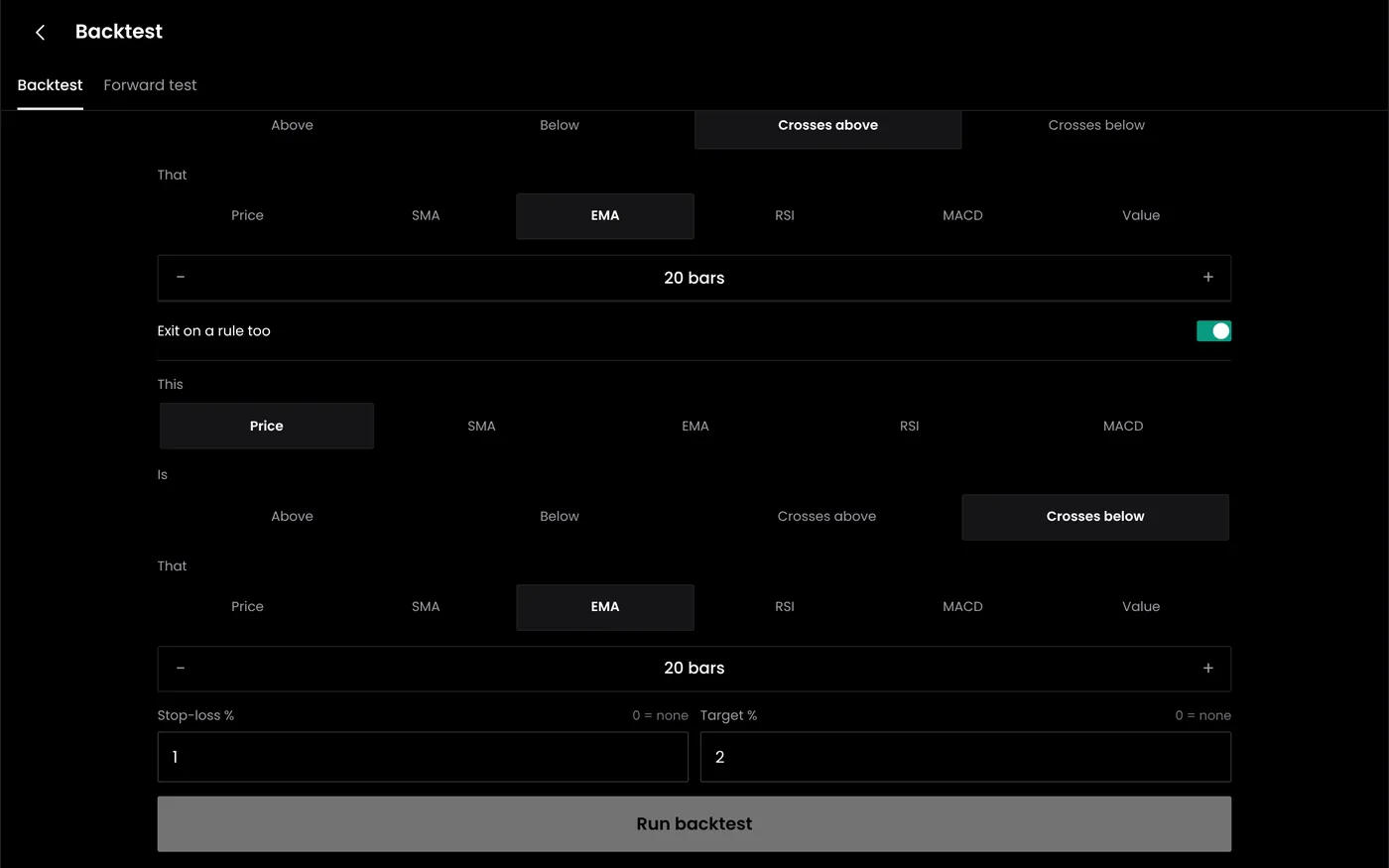
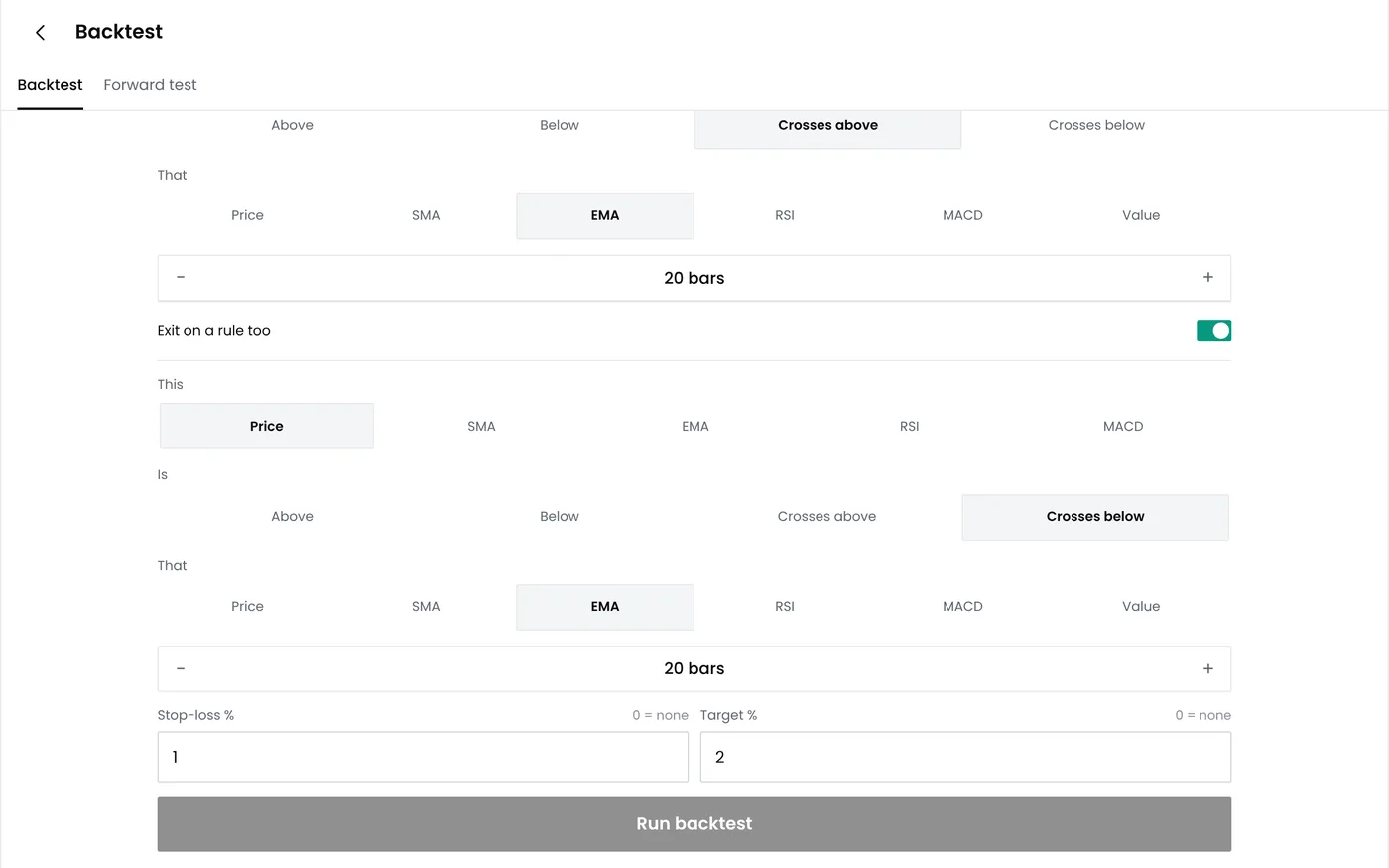
In QuantPower's strategy builder, each of these is a setting: strikes by delta, premium or distance, per-leg and combined stops, and a time exit. Test the rules over past expiries in the backtesting engine, run them in paper trading, then deploy them as a bot with an MTM stop loss for the account.
Start your free trial
Connect your broker, build a strategy and test it on paper before a single live order goes out.
Common option selling mistakes
- Treating a high win rate as safety. A strategy that wins nine times and loses once can still lose money overall if the loss is large.
- Selling more lots because margin allows it. Margin is the exchange's minimum, not your risk limit.
- Keeping the same percentage stop all week. The stop that gave room on Thursday is a noise trigger on the Tuesday expiry.
- Removing stops after a few false alarms. The stop that triggers unnecessarily nine times is there for the tenth.
- Holding short ATM options into the last hour of expiry. Gamma is highest then, and small moves create large swings.
- Ignoring costs. Multi-leg strategies with stops and re-entries place many orders. Count every charge in your backtest with the brokerage calculator.
- Adjusting without a plan. Repeated rolling can turn a small loss into a large one.
Option selling on Bank Nifty and Sensex
- Bank Nifty options have monthly expiries only, so selling strategies run over longer periods, decay more slowly early in the cycle and carry larger moves in points.
- Sensex options have weekly expiries on BSE and behave much like Nifty's. Running the same selling strategy on Nifty and Sensex at the same time roughly doubles your exposure to one market move.
How to judge an option selling backtest
Option selling backtests often look smooth until a single bad week. Look beyond total profit:
- The worst day and the worst week, in rupees and as a share of capital.
- Return on margin, not just profit per lot, because margin is what ties up your capital.
- Time under water: how long the strategy took to recover from its largest drawdown.
- Results around events, such as election results, the Union Budget and major global shocks.
- Results with realistic stop slippage, since stops in fast markets often fill well beyond their levels.
- The share of profit from the best and worst trades. A strategy whose total depends on avoiding a handful of disasters is fragile.
The max drawdown calculator and Monte Carlo simulation guide help with these checks.
A sample weekly routine for an option seller
- Check the calendar for RBI policy, the Union Budget, major results and global data.
- Check volatility: India VIX and the IV percentile of the options you plan to sell.
- Choose structures: hedged positions as the default; naked positions only with small size and strict stops.
- Set limits for each strategy and for the account, with an MTM stop loss.
- Let the rules run during the week, and review fills and slippage each evening.
- Exit before the final session of expiry day unless the strategy is designed for it.
- Review the week in your trade journal.
Costs and taxes for option sellers
Option sellers pay securities transaction tax at 0.15% of the premium when they sell, along with brokerage, exchange charges, SEBI fees, stamp duty and GST on every order; a round trip on one Nifty option lot costs about ₹90 at ₹20 brokerage per order, so a four-leg structure with stops and re-entries can spend several hundred rupees a day. In India, F&O income is generally treated as business income; confirm your position with a tax professional.
Frequently asked questions
Is option selling profitable in India?
It can be, but it is not automatically profitable. Sellers win often, but losses can be large and sudden. Profitability depends on the premium collected relative to the moves that follow, on strict exits and on costs; SEBI found that 87.7% of individual F&O traders lost money in FY26.
Which option selling strategy is the safest?
Strategies with a defined maximum loss, such as iron condors, iron flies and credit spreads, are safer than naked straddles and strangles because the loss is capped. They are not risk-free: the maximum loss can still be several times the credit.
How much capital do I need for option selling?
Enough to meet the margin and to survive a run of losses. Hedged strategies need much less margin than naked ones: in the model, an iron condor needs roughly ₹50,000 to ₹70,000 a lot against several times that for a naked straddle. Check the exact amount with a margin calculator and size by your maximum acceptable loss.
What is a 25% stop loss in option selling?
A rule to buy back a sold option if its premium rises 25% above the price you sold it at. On the model 25,300 call it is about 98 Nifty points away with 12 days to expiry and about 18 points away with one day left, so the same percentage means very different things on different days.
What is the best time to sell options?
Many intraday sellers enter shortly after the open, once the first moves settle, and exit before the close. The best time differs by index and expiry, so test it rather than copying a fixed time.
Can option selling be automated?
Yes. Entry times, strikes, stops, wings and time exits are all precise rules, which makes option selling well suited to automation within SEBI's framework for retail algos.
Which option selling strategy is best for a beginner?
A credit spread: a bull put or bear call spread has two legs, a known maximum loss and a modest margin. Move to iron condors and iron flies after a few expiries, and leave naked straddles and strangles until the exits are routine.
Related guides and terms
- Short straddle strategy, short strangle strategy, iron fly strategy and iron condor strategy
- Bull put spread strategy, bear call spread strategy and covered call strategy
- Option buying vs selling, option buying strategies, options trading strategies and option trading for beginners
- Option greeks, strike price selection, implied volatility crush and hero zero option trading
- Options risk management, hedge margin benefit, trailing stop loss and how to place stop loss order
- Tools: F&O margin calculator, option profit calculator, implied volatility option trading, position size calculator and Nifty option chain
Sources
- SEBI, Profitability of Individual Traders in the Equity Derivatives Segment (FY25–FY26), PR No. 50/2026, 20 August 2026
- SEBI circular SEBI/HO/MRD/TPD-1/P/CIR/2024/132: Measures to strengthen the equity index derivatives framework, 1 Oct 2024 (expiry-day margin, calendar spread benefit, upfront premium)
- NSE: Equity derivatives contract specifications
- Carr, P. and Wu, L. (2009). Variance Risk Premiums. Review of Financial Studies, 22(3), 1311–1341
- Black, F. and Scholes, M. (1973). The Pricing of Options and Corporate Liabilities. Journal of Political Economy, 81(3), 637–654
- Natenberg, S. (2014). Option Volatility and Pricing. McGraw-Hill