Consider a trader who uses a phone to change a rule before leaving for work. The phone loses reception on the metro. Will the rule still run? A broker-hosted rule may keep running at the broker. A script on the trader’s laptop depends on that laptop. A cloud application may keep running yet lose its broker session. All three could have looked identical on the phone. The best purchase depends on which of those systems actually has to work while the trader is away.
This guide compares five ways to set up that connection in India; provider pages were checked on 18 November 2026. For definitions, the regulatory timeline and the general registration process, see our guide to static IP rules for algo trading.
See NSE’s 20 November clarification. The undertaking includes the client’s position on exchange grievance recourse for losses caused by the algo logic. The May standards discuss development through others in the section on registered client algos. Seek written clarification from the trading member for borderline authorship cases.
Five routes at a glance
| Route | Best fit | Address seen by the broker | What you take on |
|---|---|---|---|
| Broker-hosted algo | The broker offers the rule and controls you need | The trading member’s server IP in the broker-hosted arrangement | Check the features, session behaviour and support hours |
| Your own VPS | You maintain a script and need to install your own tools | The fixed public address used by your rented server for outbound orders | Maintain the server, software, order records and recovery plan |
| Cloud reserved IP | You expect to replace or rebuild the computer running your code | A reserved public address on the actual outbound path | Manage the reservation, network configuration and replacement process |
| Paid platform IP | You already want the platform’s execution tools | Depends on the arrangement. Establish whether it is broker-hosted or client-direct | Check what the paid plan covers, its limits and its expiry terms |
| QuantPower | You want to design, inspect or test a strategy | For live use, the member must confirm the hosting and execution route | Ask which facility is available for the specific broker and strategy |
The VPS and cloud rows can describe two configurations at the same company. The useful distinction appears when a machine has to be replaced. In the first arrangement you take the fixed address that comes with a particular server. In the second you deliberately reserve the address as a separate resource so that you can retain it across supported changes. Ask which arrangement a quote actually buys.
Follow one order before choosing a plan
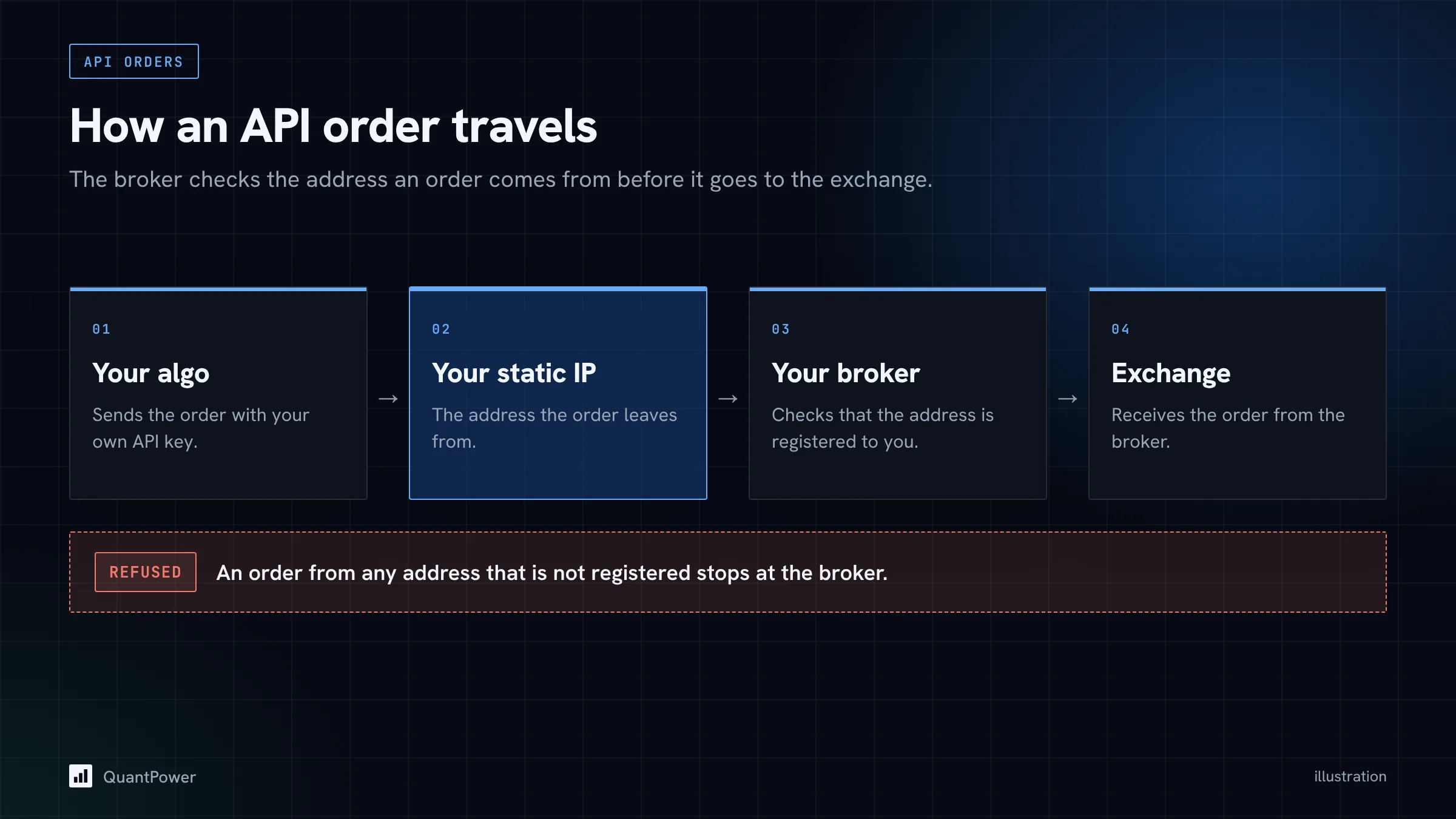
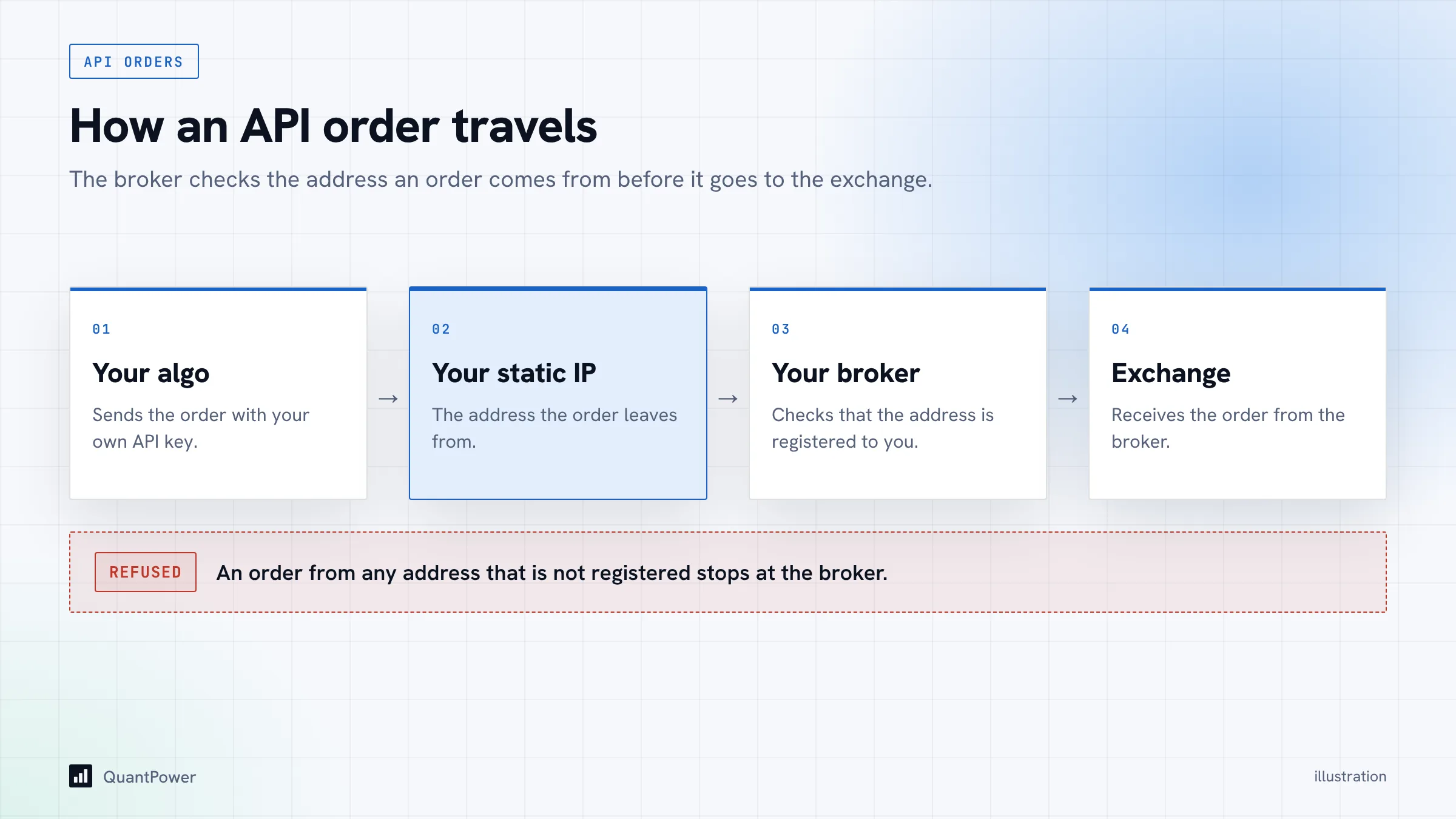
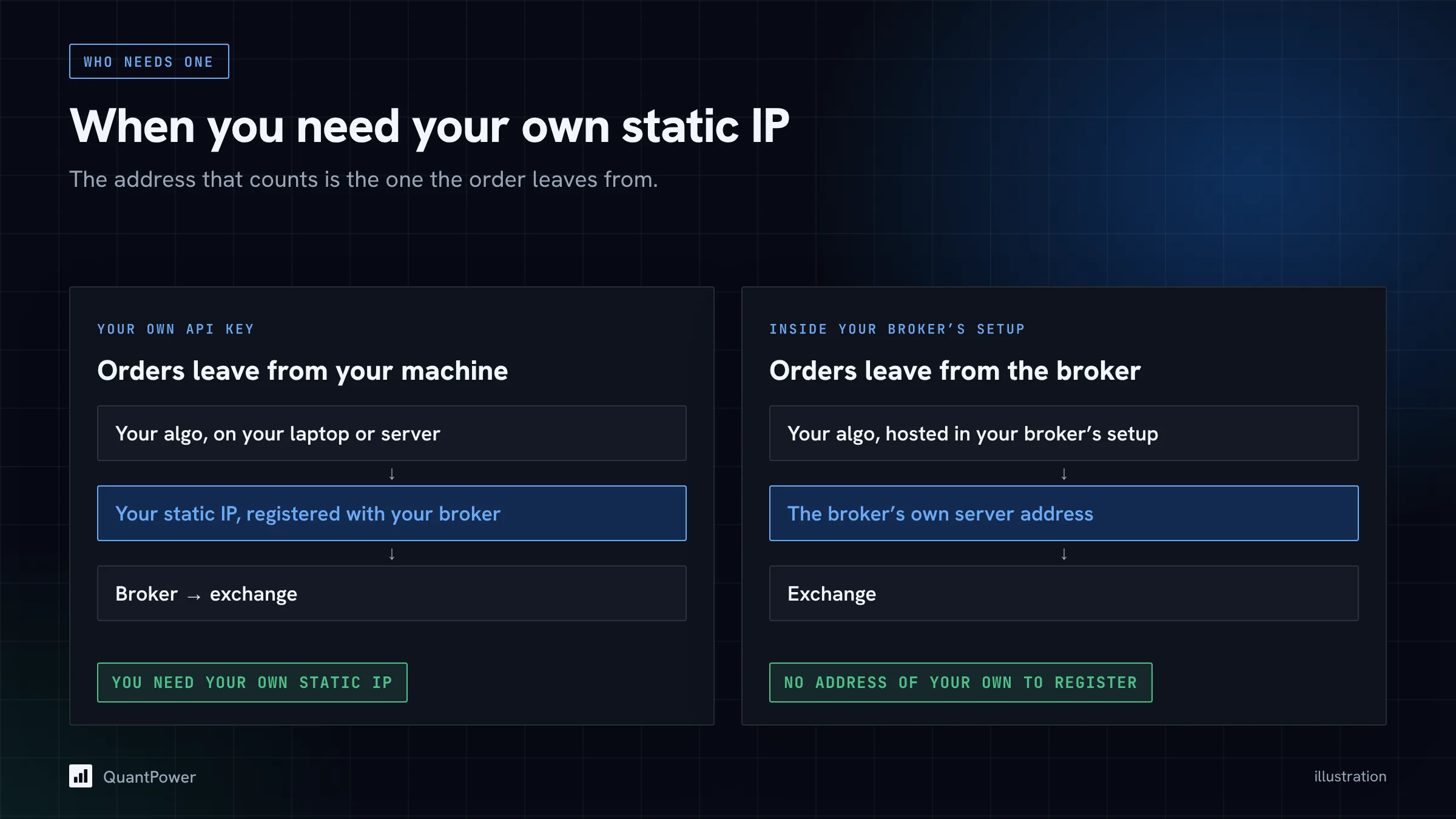
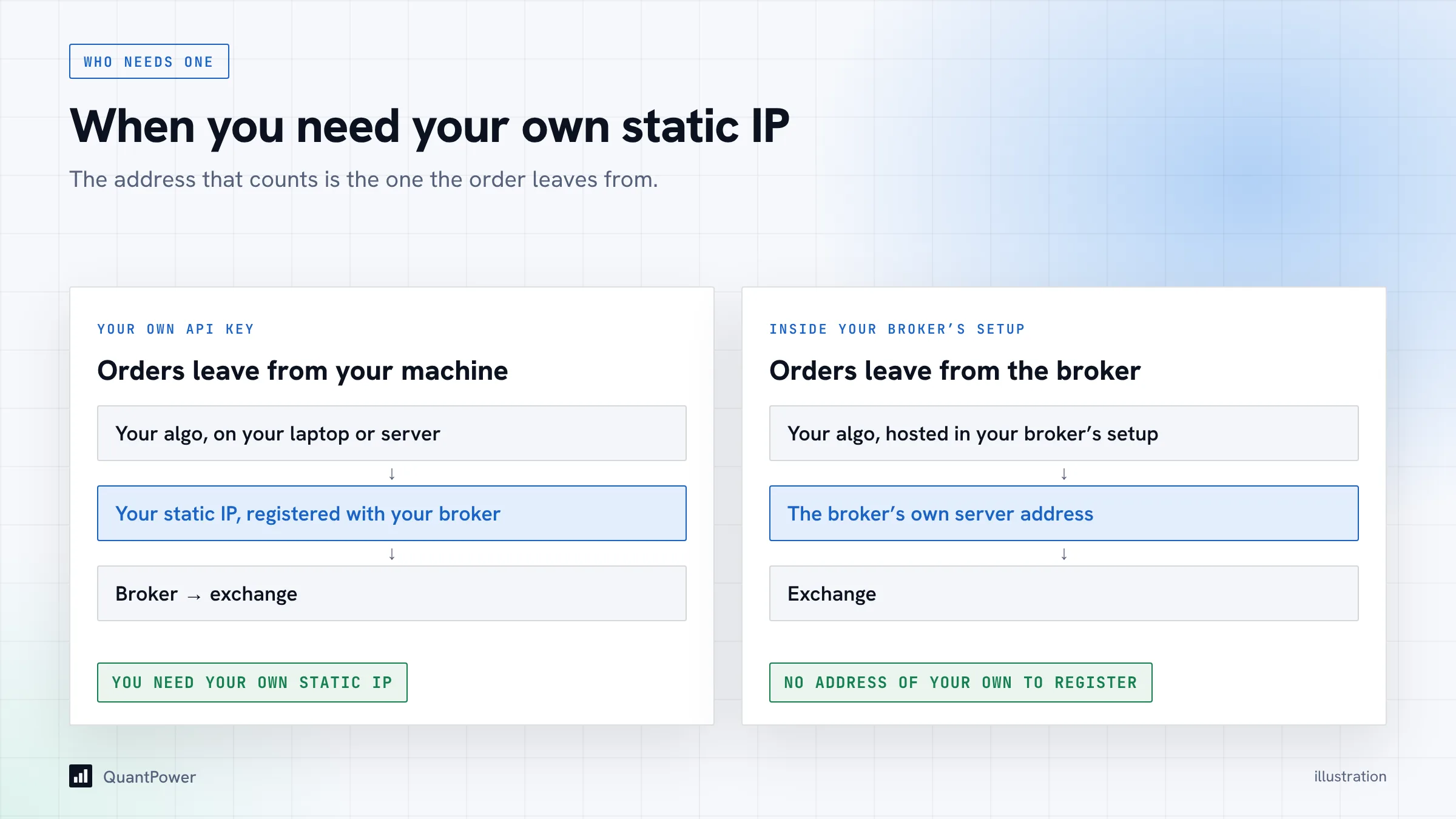
Picture an alert appearing on a chart. The chart may be on your phone, the conditions may be checked on a server, and a third component may submit the order. Write down where the conditions are evaluated, which component contacts the broker’s order API and whose account authorises that call. For example, “my script on my rented server uses my personal API key” tells you which machine’s outbound address to discuss with the broker.
For Indian retail API orders there are two separate questions. One is how the broker identifies the source. The other is whether the strategy needs individual exchange registration. A personal script that sends just one order through the client’s trading API still needs the client’s mapped static address. Order rate matters for registration and tagging. NSE set the client order-rate threshold at 10 orders per second per exchange or segment, and brokers may apply a lower client limit. A lower limit changes how fast you can submit orders. It leaves the source-address requirement in place.231
A second useful distinction is between sending instructions and viewing information. Seeing prices arrive on your screen tells you the data connection works. Seeing your holdings tells you a request for account information succeeded. Neither tells you which address the broker would see on an order. During a product comparison, ask for the broker’s documented way to verify the order connection or its mapped address. You can establish the setup without placing a live trade merely to see whether it goes through.
When the broker runs the algo
Start here if the strategy is already available inside your broker’s setup. Ask the broker to confirm that the rule runs on its infrastructure and the order originates from its server. For an empanelled provider’s platform hosted there, NSE identifies the trading member’s server address as the relevant static IP. The retail user does not need to procure a client address for that route.1 A branded website, a mobile interface or a broker login button alone tells you very little about where a strategy runs.
The chief attraction is how little infrastructure the user has to own. You choose from the facility the broker makes available, set the conditions and retain the means to stop it. There is no personal server to patch for this arrangement and no reserved address to renew. That can make a broker-hosted facility the best choice for an occasional user, even one who knows how to run a server. If the broker already offers the exact rule, managing an extra machine buys little.
Look closely at where the facility ends. Suppose a rule requires a particular data interval, an adjustment after a partial fill and a stop at a set time. Ask how the broker-hosted tool represents each part. If its settings cover the entry but leave the adjustment to you, that is a material difference. Ask what happens to an active rule when you close the browser and which instructions remain open after you disable the strategy. A screenshot of a switch cannot answer either question. The broker’s description of the order lifecycle can.
Before choosing this route, find a completed example in the broker’s help material and follow it through to the order history. Can you identify the rule that generated an order? Can you find the broker’s order reference? Where would you check a pending instruction from a second device? Those answers matter when you have to call support. They also help you decide whether the simplicity of staying with the broker is worth accepting a more limited choice of rules or integrations. Ask separately about access charges. The absence of a personal IP purchase says nothing about other charges for the facility.
When to run your own VPS
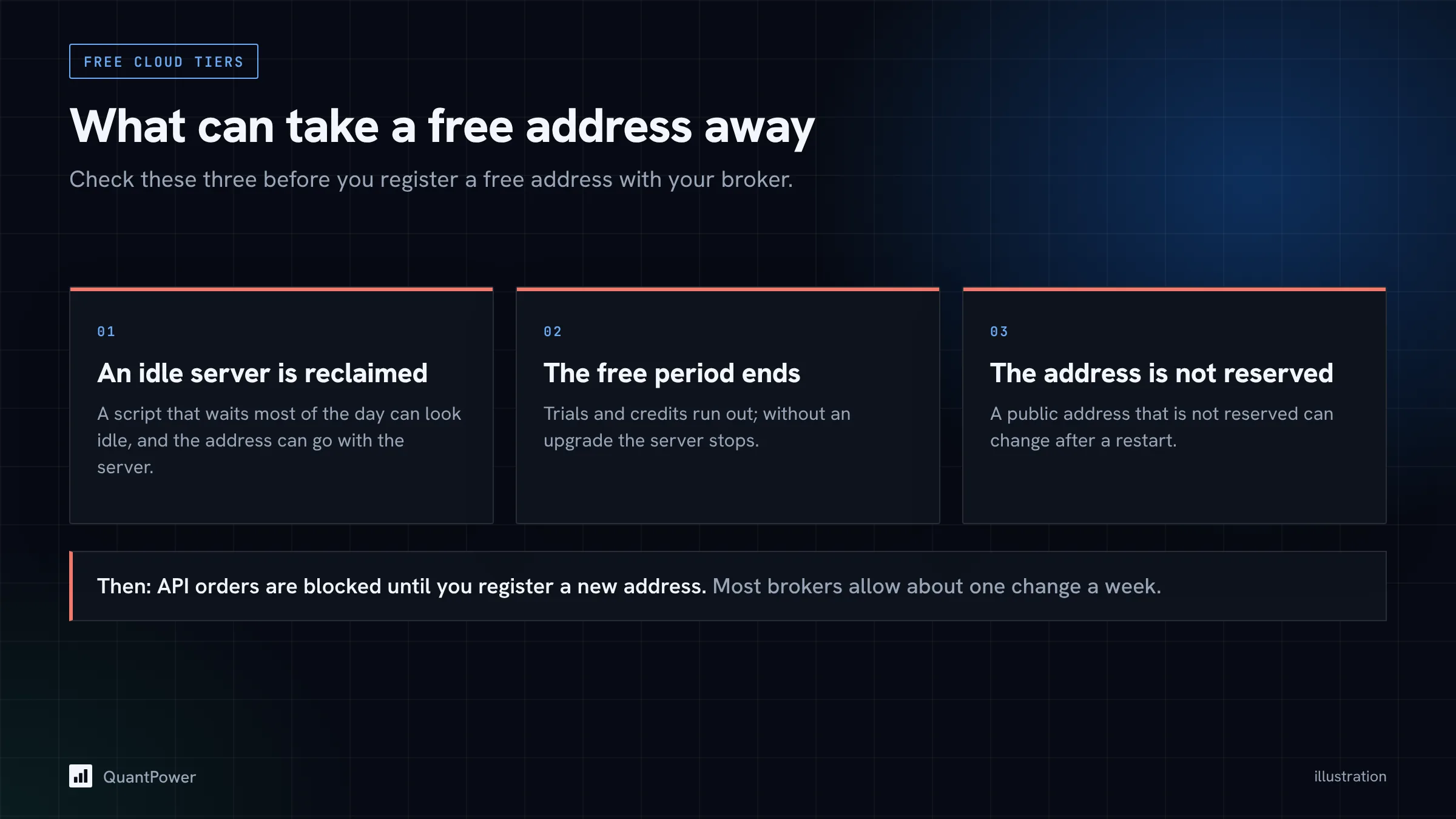
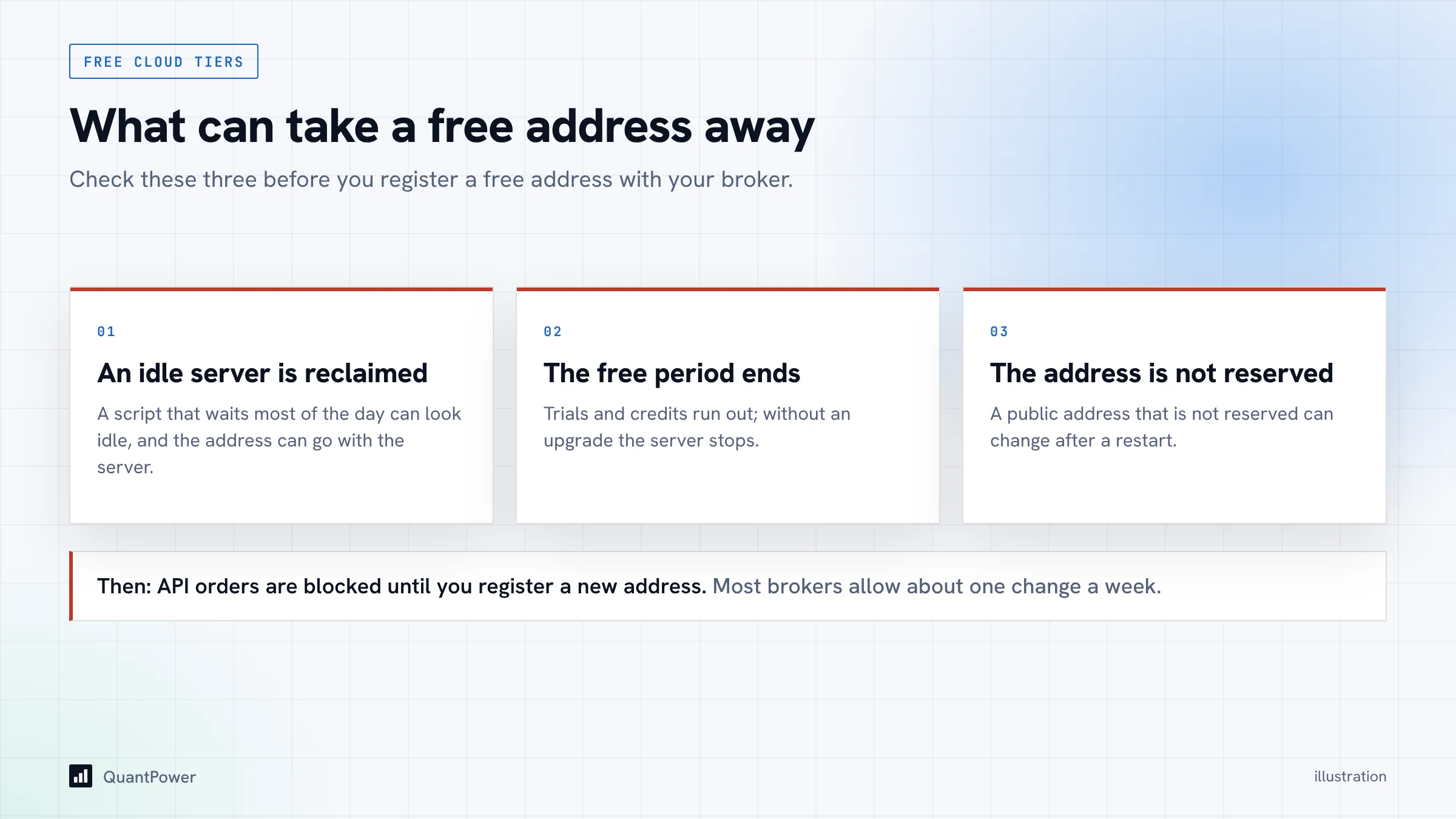
A virtual private server is a rented computer you administer. This route suits a trader who can explain why the strategy needs a particular runtime, library or file layout. You install those dependencies, set the time zone, arrange for the process to start and keep a record of what it does. An address registered for the server can let the order process run independently of the connectivity at your desk. Your broker must support the client-direct setup you propose, and the public address actually used for orders must match its records.
Consider a small Python strategy that reads a file you prepare each morning. Moving the script to a VPS solves the sleeping-laptop problem, but only if the file reaches the VPS too. Ask what the script should do if the morning file is missing. Which copy of yesterday’s file is still on disk? Can a restart run the same schedule twice? These are ordinary application decisions you inherit with a VPS. A hosted strategy tool may answer them for you. The advantage of your own server is that you can give them the answers your workflow needs.
Read the server provider’s address policy before selecting a machine. Ask what happens after an ordinary restart, a reinstall and a full replacement. Those are three different events. A host might keep an address for the life of a subscription while assigning a different one to a replacement machine. If you rely on a backup image, verify whether restoring it brings back only the disk or also gives you a supported way to retain the outbound address. A working copy of your code and an address the broker recognises are separate parts of recovery.
Then estimate the work you will personally do. Someone must notice a full disk, apply operating system updates, renew the account and keep a usable copy of configuration outside the server. Someone must also know how to disable the strategy when remote access is unavailable. For an individual trader, that person may be the one sitting in a train when an alert arrives. Decide whether the broker’s own order book gives you enough visibility from a phone. An inexpensive machine can be a good choice for an owner who wants these duties and an awkward purchase for someone who simply wants to edit trading rules.
A practical acceptance check is to restart the application with order submission disabled. Look for one running copy, the intended trading date, the right configuration and a clear indication that the broker session requires attention when appropriate. Record how long that check takes you. Your own measured recovery effort is a better basis for comparing maintenance with a managed service than a general claim about server uptime.
When a cloud reserved IP is worth managing
A reserved public address is useful when you want to keep the broker-facing network identity while changing what runs behind it. For example, Amazon EC2 lets a customer allocate an Elastic IP address and associate it with a supported resource. Within the applicable location constraints it can be reassociated. AWS documents both those constraints and the charges associated with public addresses. Treat reservation, association and release as three distinct actions when you plan a move.4
Imagine replacing a server because a newer software version requires a fresh operating system. You can prepare the new machine while the old one is still available. With the old order process stopped, the reserved address can move to the supported replacement. The attraction is continuity at the broker while you change the machine. It does take coordination. A moved address does not copy your strategy settings, establish the broker session, carry pending instructions across or tell the new process what the old one has already sent.
Look at outbound traffic in particular. Some systems have one public address where visitors reach a dashboard and another where a private server’s internet traffic exits. Reserving the dashboard address would keep the website reachable while doing nothing for your broker’s allowlist. Ask the person setting up the cloud account to identify the actual outbound component on a drawing. Have them explain what would change if the application moved to a different network or region. Where the broker provides a connection check, use it from the environment that will place orders.
A separate reservation is worth the extra work when you regularly rebuild systems, want a controlled way to roll back a software update, or already maintain cloud infrastructure. It is less attractive for a single unchanging script if nobody understands the network settings. Compare the server, the address, any network gateway, storage for recovery and the effort of keeping the configuration recorded. An idle resource can still appear on a bill. Put an owner beside every item you intend to retain after the original machine is retired.
Before committing to this route, write down the largest failure the reservation actually covers. Replacing one machine in the same supported location is one case. Losing access to the cloud account is another. Moving to a different region raises a different set of restrictions. If your main concern is losing one machine, a movable address can be a precise solution. If your main concern is losing access to the entire account, you need a way to manage existing orders and obtain help independently of that account.
When to pay a platform for a fixed address
Some trading platforms bundle the address with a managed execution environment. AlgoTest, for example, describes a paid Virtual Execution Environment with its software installed on a dedicated cloud machine and a fixed IP. Its documentation also explains how to see linked connections and the environment’s expiry date. If you already want those platform tools, compare the complete service with the work of running your own server. A rented address alone would not give you the same editor, execution settings or support process.5
Start with compatibility. Give the platform the exact workflow you want to use, including where the rules come from, the broker connection, the market segment and whether an external alert is involved. Ask which parts run on the platform and which run within the member broker’s infrastructure. With a provider-developed strategy, the required hosting arrangement still matters. A plan description that says “dedicated IP” answers an address question. You still need an answer about the strategy’s host.1
Ask what the address belongs to under the contract. It could belong to the execution environment you rent and remain available only while that environment is active. Find out whether a renewal preserves the address, whether changing plans replaces the environment, and what the vendor retains after a lapse. Also ask what can be exported before cancellation. A copy of the order history is useful for records. To move a strategy, you may also need its conditions, instrument references, timing settings and a human-readable description of what each exit does.
This route makes sense when it removes a job you would otherwise have to do. For example, you may be comfortable setting the logic but have little interest in maintaining a server image. Equally, a platform can be a poor fit for a script that depends on a custom library or a data file the service cannot accept. Ask about a specific dependency and request a written answer for the plan under consideration. The useful comparison is between a platform that supports the whole workflow and the alternative you would actually have to maintain if it does not.
Renewal deserves a place in the buying decision. Find out who receives the expiry notice and what you can still see if the plan expires on a trading day. In particular, establish where to view or manage instructions already accepted by the broker. The service that creates fresh orders and the broker that records accepted orders have different roles. Keep the broker’s contact and independent sign-in details accessible even if the platform normally provides all the screens you use.
How to evaluate QuantPower for your setup
Start in the strategy builder. Write down your entry and exit conditions, inspect the rule and backtest what it does. You can do that work before deciding how live orders would be hosted. For the actual connection, use the broker connection requirements and confirm the route with the member.
Where the member hosts a provider strategy, the broker’s server originates its orders. Ask which strategy is offered and which broker controls apply. A fixed address offered by a platform does not establish where the strategy runs.
For QuantPower’s static-IP route, the tech-savvy client who writes their own algo completes the declaration and has the client’s static IP registered at the broker. QuantPower then runs the algo on its own servers through that registered address. Where the broker hosts QuantPower, the broker’s server originates the orders and the client needs no static IP.
Quanty can turn a rule you describe into editable code, and an assistant connected through MCP can help draft it. Those tools do not remove the declaration or change where QuantPower runs the live algo.
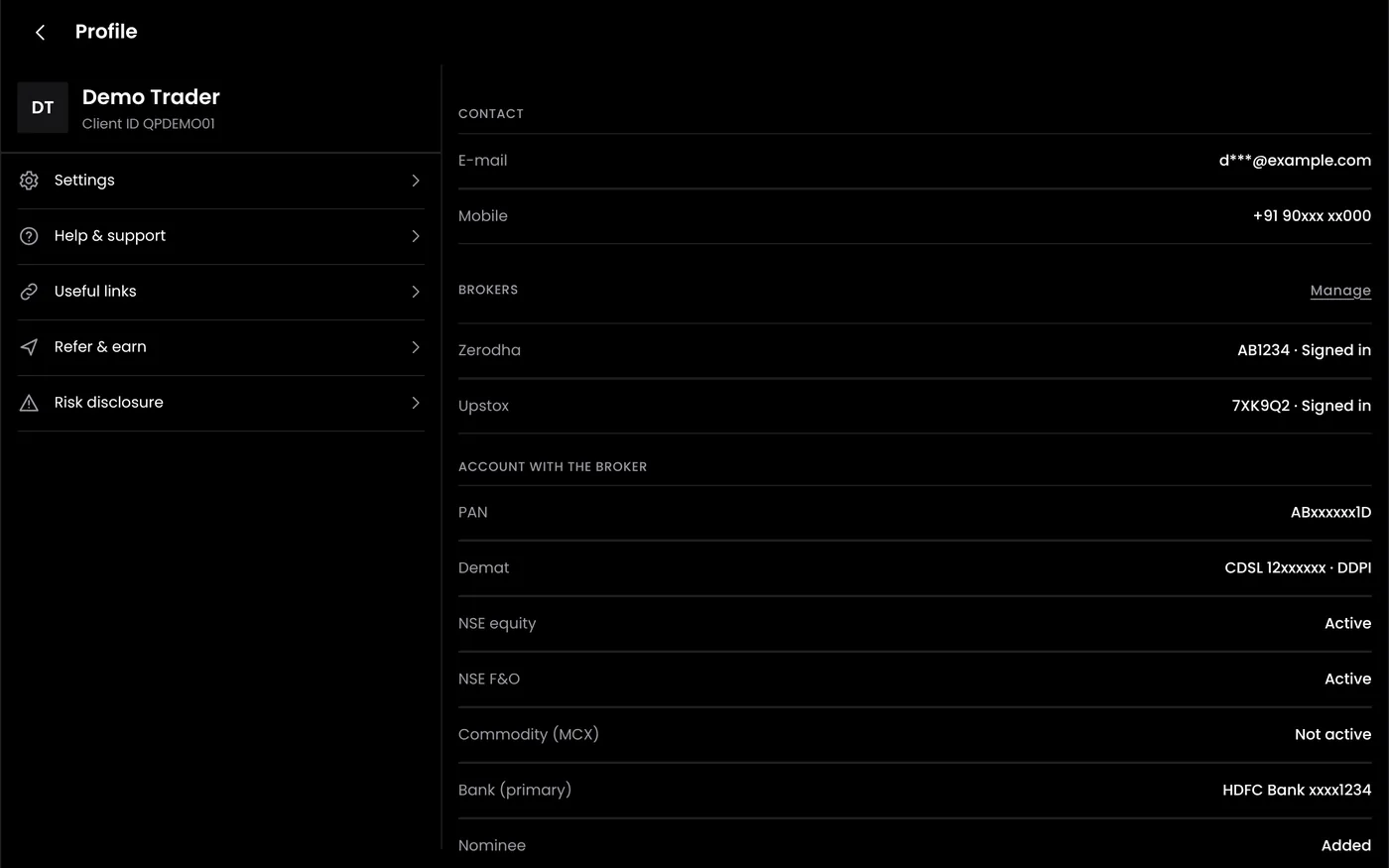
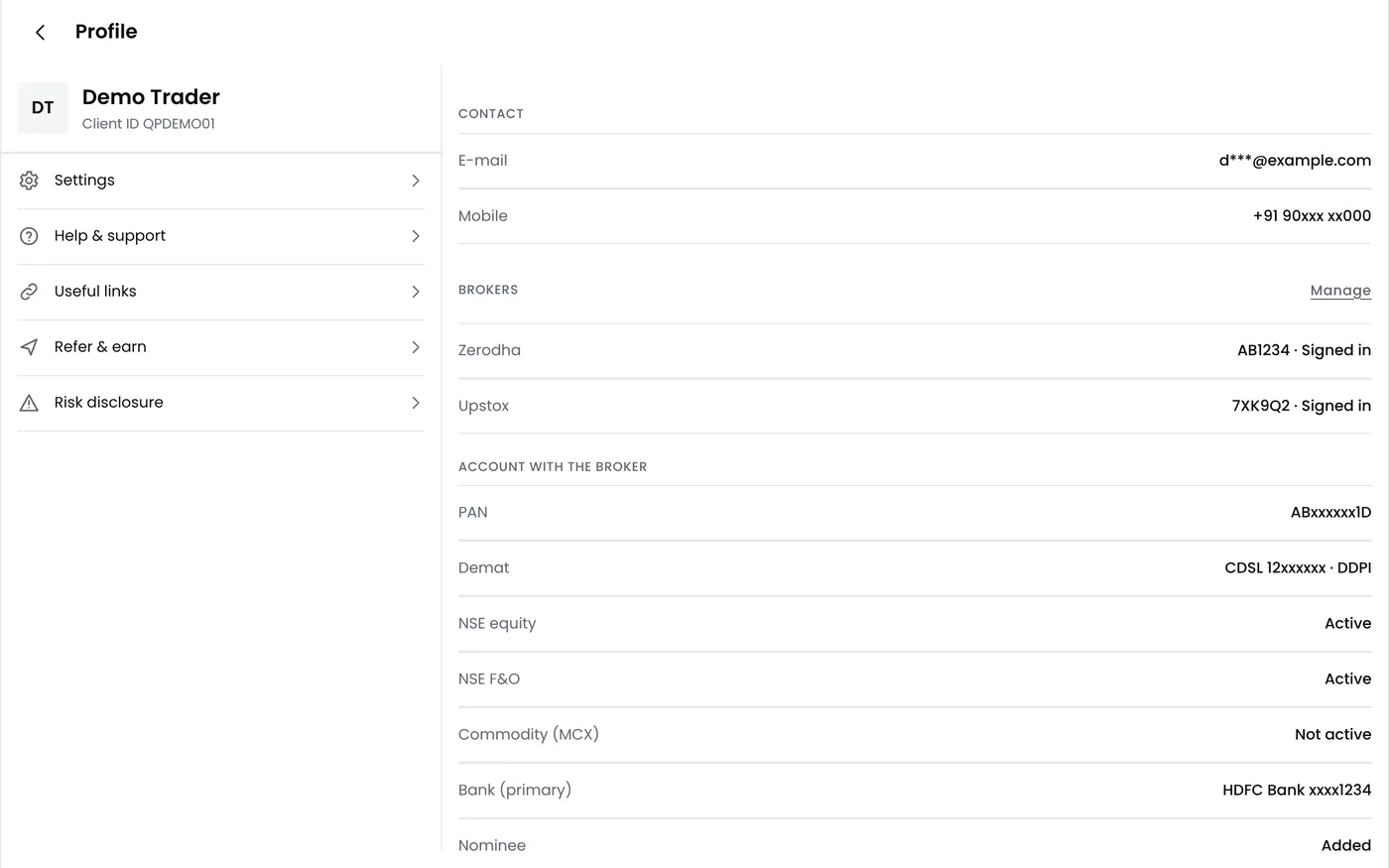
If you need an operating system you can administer, ask who controls the host, what runs there and which address originates its orders. An address displayed on a broker connection does not move an unrelated script off your laptop or establish ownership of its strategy.
What belongs in a like-for-like quote?
Ask for the cost of operating your intended setup over a normal billing period and over one planned rebuild. That second question changes the comparison. A basic VPS quote may cover a machine and its address through an ordinary month. A rebuild may also need temporary capacity, a backup restore and time from the person who looks after it. A platform quote may include the software and setup support while limiting which external tools can connect. A broker-hosted option may have no client IP charge at all. Put the inclusion beside the charge it actually replaces.
| Ask each supplier | What to write in your comparison |
|---|---|
| What is assigned when I open the account or buy the plan? | A named execution service, a server, a reserved address or a pair of account addresses |
| What keeps the assignment active? | Account status, a paid machine, an address reservation or a platform renewal |
| What changes if I replace the machine? | Whether I keep the same address and who must make the change |
| Is a working backup included? | The address supplied, where the backup process runs and how I can check it |
| What remains accessible if I cancel? | My settings, rule definitions, historical records and any outstanding broker orders |
| Who handles an address-related rejection? | The first support contact, evidence they need and who can correct the mapping |
Compare the answers for a specific situation. Say you use one strategy during the week, leave it idle on weekends and need no one else to operate it. A paid platform may save you enough administration to justify continuing the plan while idle. If you already maintain a cloud account for other work, retaining a reservation there may be simpler for you. A new trader who can use the broker-hosted rule may have no need for either purchase. Cost comparisons make more sense after you remove the options that cannot run the rule in the first place.
Support time is part of the cost even if it never appears on an invoice. A useful pre-sales question is, “If my broker reports an address mismatch, can you tell me which address your service used for that connection and when?” The cloud provider can explain its network resources. The platform can explain the execution environment. The broker can explain what it has mapped to your key. A supplier that tells you which of those records it can provide has given you something more concrete to compare than a promise of rapid support.
Test what the backup protects against
A second address is useful only in a failure where a working process can actually use it. Start with one incident you want to survive. If home internet fails, an application already running at a data centre may continue to evaluate rules. Your immediate problem could be getting a reliable view of existing orders from another device. If the application itself stops, a second address attached to the same failed machine may achieve little. If the broker session expires, both addresses can be correctly registered and neither can restore the session on its own.
Set aside a period when the strategy is disabled, preferably outside trading hours. For a self-managed setup, start the intended backup in a mode that cannot submit orders. Check that it has the correct rule version, trading calendar, instrument configuration and last recorded state. Use the broker’s supported connection checks where available. For a managed service, ask the operator what part of this rehearsal you can observe and what it verifies on your behalf. Write down anything you could establish only from an assurance rather than a visible record.
One event deserves particular attention. The primary sends a request, then loses the connection before displaying an acknowledgement. The broker might already have recorded the order. Starting the backup and sending the same instruction could create a duplicate. Use the broker’s order book and available references to resolve what happened first. If the broker itself cannot yet confirm the outcome, leave that instruction unresolved and contact support. An orderly recovery sometimes consists of keeping fresh submissions paused until the two records agree.
A different failure can look similar on a phone screen. The broker clearly rejected the request because its source did not match the registered address. Here the missing acknowledgement is no longer the question. Look up the mapping for the particular key, the active outbound route and the time of the rejection. Correct the cause through the broker’s and provider’s documented processes. Keep these two cases separate in your notes, because a confirmed rejection and an unknown order status lead to different decisions about any later submission.
How the choice changes for three traders
The three traders below are examples, not customers.
A trader who works from two cities
Meera alternates between Pune and Bengaluru and uses a phone to check a rule at lunchtime. Her first instinct is to buy a static IP for each home. But the broker confirms that the rule she selected runs on its server and explains how she can review its orders. Her home connections are simply two places from which she views the account. Paying for fixed home addresses would add work without improving the source of the broker-hosted order. Her practical check is whether she can pause the rule and locate open instructions from either city.
If she instead uses QuantPower’s static-IP route, her laptop and home connection are not the execution host. After she completes the declaration and the static IP is registered at her broker, QuantPower runs the algo on its servers through that address. Her two homes remain only places from which she views and manages the account.
A developer who rebuilds his machine regularly
Imran packages his strategy with a small service that reads his own data files. He wants to change the operating system periodically and be able to restore the previous version. The important question for him is whether a replacement can inherit a suitable address while he retains a known copy of his application state. He opts to compare a movable cloud reservation with his VPS host’s documented replacement policy. He asks both providers to walk through replacing the machine after the original is unavailable.
A provider might answer that planned maintenance preserves the address but emergency replacement does not. That is valuable information even if ordinary restarts have always worked. Imran can decide whether to prepare another registered route or choose a more portable reservation. His own responsibilities remain tangible. He has to preserve the morning input file, disable the retired process, and make sure the restored one recognises instructions already recorded at the broker. A cloud address helps with the network part of that job.
A trader choosing between two managed services
Anita needs no custom runtime. She asks the platforms under consideration to show how she can inspect a rule, test a change, see a rejection and stop further entries. She asks her broker which facility it offers and where the strategy would execute.
Anita records the plan terms, the controls available to her and the broker’s answer about order origin. She can continue testing the rule while she checks whether a suitable live route exists.
Moving an existing strategy without losing track of orders
Choose a time to move when fresh order submission can stay disabled. Make a record of the current broker application, the key’s identifying label, the registered addresses and the open instructions already visible at the broker. Keep credentials out of that record. Save a readable copy of the rule settings and give it a date. Someone looking at the old and new installations should be able to tell which version is meant to run and which one is being retired.
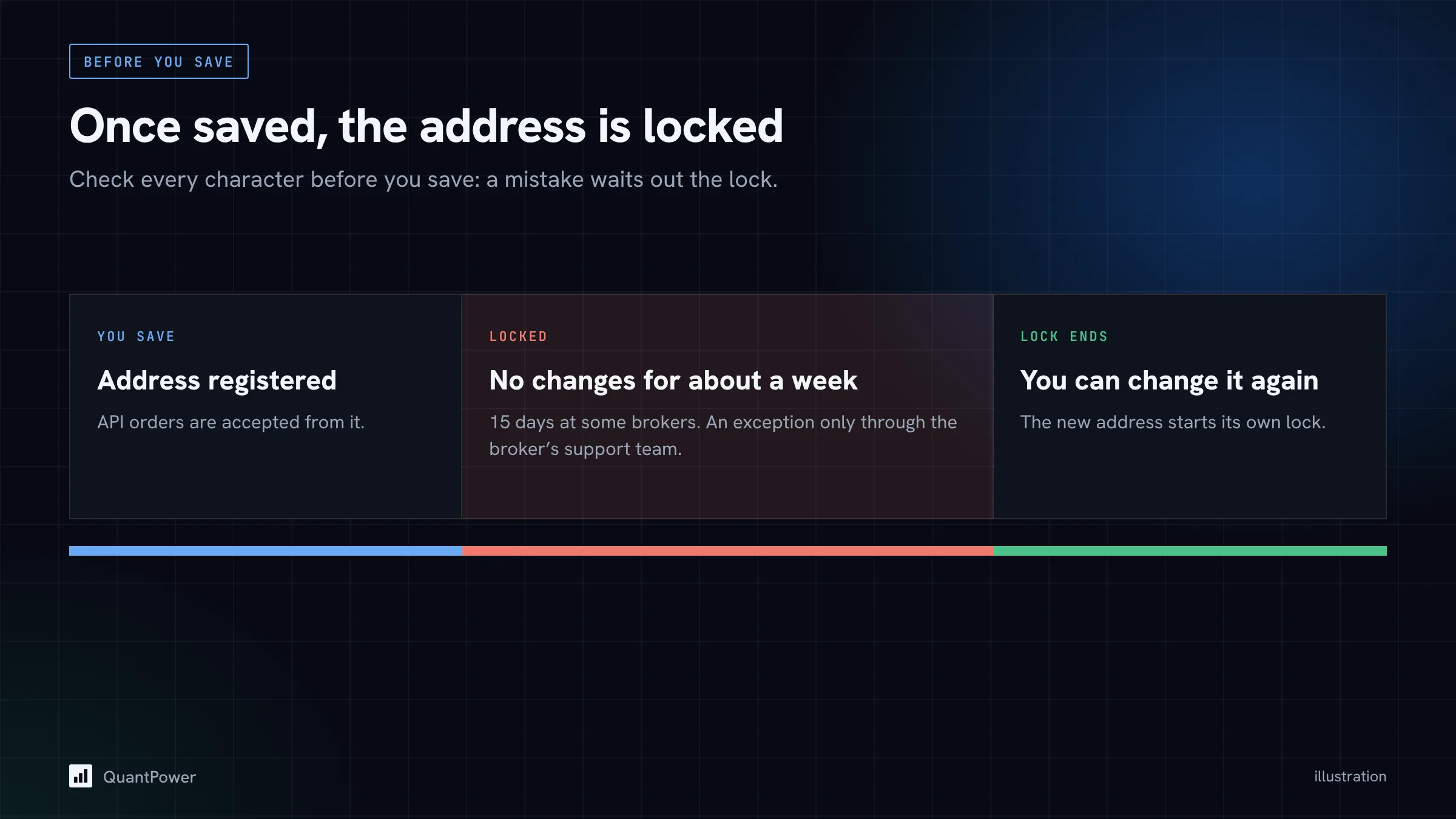
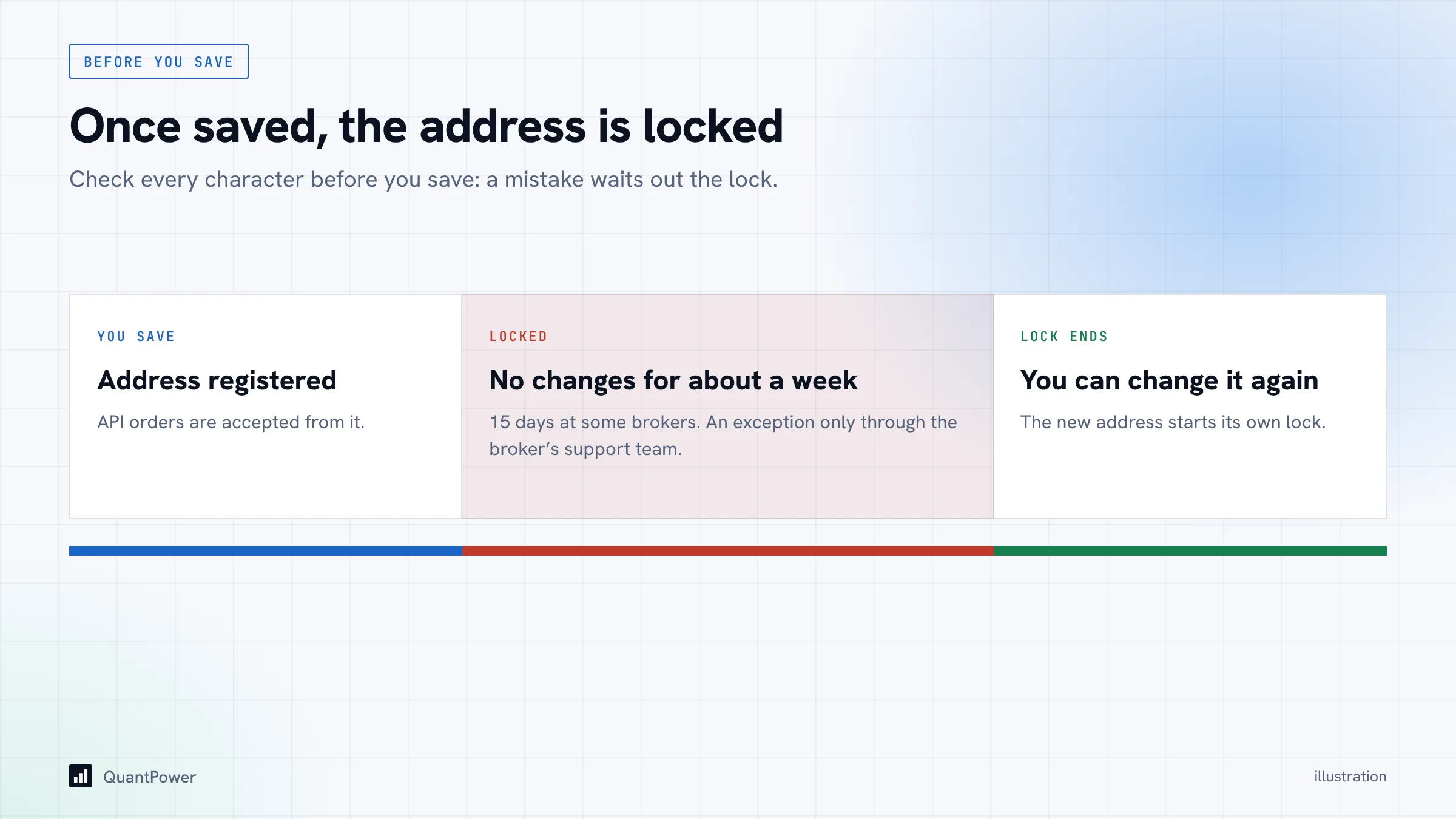
Check the broker’s change policy before releasing a working address. NSE ordinarily allows the client to update the mapping once in a calendar week and provides for contacting the broker in exceptional circumstances. A server rental that ends before a new mapping becomes usable can leave an awkward gap. If you are moving between paid services, check the old provider’s release date and the new provider’s activation date together. Only the broker can confirm when its side of the change takes effect.3 Our guide to whitelisting a static IP with your broker shows where each broker keeps the setting and how long a change is locked.
Pick one person to decide when the old process is disabled and the new one is allowed to send. For a personal setup that may simply be you, following a written sequence. The important detail is that restoring a machine from yesterday’s image can also restore yesterday’s schedule. Verify the old installation cannot resume unattended. Compare what the new system believes is open with what the broker shows. A clean changeover ends with one active sender, the intended address and a recognisable record of who made the switch.
Make the decision in one conversation
Ask your broker or provider to finish this sentence for the exact facility you plan to use. “My rule runs on this machine, my order reaches the broker from this address, and if the machine stops I can check outstanding orders here.” A broker-hosted answer can end the search for a personal IP. A self-managed answer should identify the server and how its address survives replacement. A paid platform should explain its service boundary and renewal terms. For a QuantPower connection, ask the member to identify the hosting arrangement, actual order source and applicable mapping.
Choose the arrangement that supports the strategy and can be verified by your broker. For a provider strategy, establish the member’s hosting and execution arrangement. For eligible client-developed code, document the client host, its origin address and how you would recover it.
Frequently asked questions
Do I need to buy a static IP if my broker runs the algo?
No. When the strategy runs on the broker's servers and its orders leave from there, the address that counts is the broker's own server address.1
Does a script that sends only one order need a registered static IP?
Yes. Any order from your own script through your broker's client API must leave from the static IP mapped to your key. The 10 orders a second threshold decides when a strategy needs exchange registration, not whether the address rule applies.3
Is a reserved cloud IP better than a VPS address?
It is better when you rebuild or replace machines, because the reservation can move to a replacement within the provider's rules. For one unchanging script, the address that comes with a VPS can be enough.
Does a QuantPower account qualify me for a client static IP?
Account registration, an API key and confirmation of a generated draft do not establish eligibility. For the client-direct route, the member must obtain the undertaking from the qualifying investor and map the address of the execution host. On the broker-hosted route the broker’s server originates the orders.
Related guides
- Free static IP for algo trading: what the free tiers really give
- SEBI rules for algo trading: the whole framework
- Trading API basics: how API orders work
References
- NSE, FAQ on retail algo trading, 3 November 2025, questions 3 to 10 (nseindia.com)
- SEBI, circular SEBI/HO/MIRSD/MIRSD-PoD/P/CIR/2025/0000013, safer participation of retail investors in algorithmic trading, 4 February 2025 (sebi.gov.in)
- NSE, circular NSE/INVG/67858, implementation standards for safer participation of retail investors in algorithmic trading, 5 May 2025, sections A to C, A.6 and F (nseindia.com)
- Amazon EC2 documentation, Elastic IP addresses, checked 18 November 2026 (docs.aws.amazon.com)
- AlgoTest: its Virtual Execution Environment documentation (docs.algotest.in) (checked 18 November 2026)