The most useful starting point is a general question with a year attached. For example, you can ask what the name of a statement means, where to find an official explanation or how to describe two account reports without treating them as interchangeable. Keep identity and account details out of your message. If you need someone to evaluate your own transactions or sign off on a return, talk to a qualified tax professional.
What kinds of questions are in scope?
Start with something you want to understand, rather than an instruction to make a decision for you. “Which official page explains the Annual Information Statement for Assessment Year 2026–27?” is a concrete request for a source. “How should I report what I made?” is a request about your circumstances, which cannot be answered reliably without knowing the applicable period, rules and facts. Whether a single line on a statement is enough to answer that question is itself something an adviser may need to assess.
You can also ask for a plain-language reading of a concept that appears in a report. For example, explain why the date a trade appears in one report might not be enough to identify the reporting period a particular official form asks about. Ask what labels, time period and transaction type you would need to check, without including the underlying records. Quanty can help organise the question; it does not determine the result.
Other useful questions concern the difference between a platform calculation, a broker's record and a government-reported figure. These can describe related activity at different levels of detail. A calculator can teach an arithmetic method, but it does not become a filing record. A question such as “Which dates does an official help page say this statement covers?” is more useful than asking the software to treat a number on a dashboard as final.
Start with the reporting period
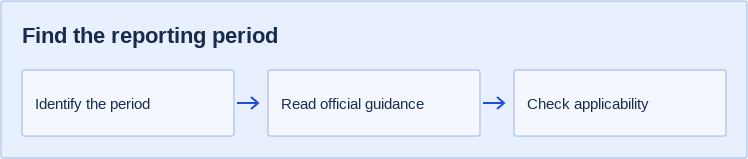
A year written as “2026–27” can be ambiguous during a change in tax law. The Income Tax Department distinguishes Assessment Year 2026–27 for income from Financial Year 2025–26 from Tax Year 2026–27 for income earned from 1 April 2026 through 31 March 2027. Its official FAQ explains that the former return follows the Income-tax Act, 1961 and that the new Act applies from Tax Year 2026–27. Use the full label, not just the year number. See the Income Tax Department's scope FAQ.
If you are quoting a page, check the title, date and the period it names. A person might read a page describing the next filing cycle while looking at a record from the previous financial year. Those two pages may use related terms without covering the same period. That does not make either page wrong; it means the answer needs to keep the source and the period together.
When you do not know the full label, say that explicitly. A good question is “I see 2026–27 in two different documents. What could the labels AY and TY mean in this context, and which official explanation should I read?” You do not need to include a personal identifier or screenshot to ask for that distinction. For a filing position, confirm the period with your professional and the then-current official guidance.
Ask a question that can be verified
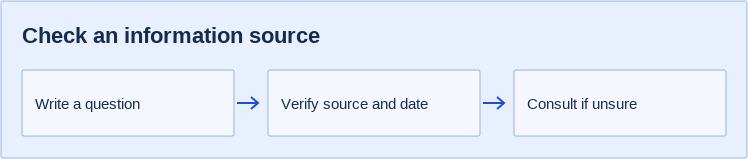
Make your question specific enough to look up. Start with the source or phrase you found. Add the period. State whether you want a definition, an official reference or a checklist of information to collect. If the response refers to a deadline, limit or tax provision, ask for the applicable period and the authoritative reference, not just the number. A source without a date or a rule detached from its effective period is not an adequate basis for a filing.
Here are some example questions:
- For Assessment Year 2026–27, what does the Income Tax Department's help page say AIS is intended to show?
- What is the difference between a charge shown in a broker report and a tax payment visible in a government record? Please explain the terms, not my liability.
- Where can I check the Income Tax Department's official guidance on which return forms exist for the year I am asking about?
- What information can I summarise for a qualified professional without submitting any tax or identity documents to chat?
- How do I ask about the difference between a trading result and a tax calculation without implying they should always match?
Check the link yourself. Look for the exact period or definition in the document. If the answer gives two possible readings, separate the question into two. Ask for an explanation of the distinction, rather than choosing the first language that looks familiar.
Keep your records separate from the learning question
You do not need to upload a PAN card, Aadhaar number, tax return, bank statement, broker contract note or account screenshot to learn what a term means. Do not share login credentials, one-time passwords or access tokens. If you need an example, make up figures and label them as fictional. When you share a short error or field name, remove account numbers and other identifying details. If a third party needs to review real records, use the process and permissions they prescribe instead of sending the records to a learning interface.
An offline checklist can help you prepare for that separate review. Write down the document names, periods covered and differences you noticed. Keep notes about whether the amounts are displayed as totals or broken down by charge. Record where you downloaded an official document so you can find it again. Do not copy the amounts into chat simply because you can describe them in a question.
If amounts disagree, do not assume that one is wrong or that the difference is automatically taxable. Ask which fields, time periods and included items should be compared. A meaningful reconciliation requires comparable records. If something appears to be missing, the question is what source and period to check, not what number to enter without verification.
Find the right official starting point
The Income Tax Department e-filing portal is a starting point for current filing information and help. The Annual Information Statement FAQ describes the statement and what information it may contain. Read it alongside the period-specific transition guidance rather than assuming an older term applies without change. Where different documents appear to say different things, check the effective period and ask a qualified professional which source applies to your case.
For related learning, the F&O taxation India guide covers the topic separately and the STT tax calculator illustrates a specific type of charge. The stock profit calculator demonstrates a different calculation. These links do not expand this page's scope. None of these replaces official guidance or advice about your filing.
When to take the question to a professional
Take a personal question to a qualified tax professional when it turns on how your transactions should be classified, which return you should file, which provisions apply to your situation, how a notice should be answered or how to deal with an apparent mismatch in your records. Do the same when a deadline or correction affects an actual filing. A learning interface cannot determine those facts for you. It can help turn “I don't understand this” into a precise question with a specific year and source.
Before the appointment, list what you want resolved. For example: “I have two records covering different dates. Which one should we use for this comparison and what else do you need?” Telling the professional what is uncertain is often more useful than presenting a confident guess. If you were reading a public source, record the link and the exact term rather than claiming it applies to you.
Information only, not tax advice. Read the official source and consult a qualified professional for your circumstances. QuantPower does not submit returns, make payments, contact a tax authority or give buy/sell advice.
Example: Turn a vague question into a source check
Suppose someone asks, “I keep seeing two statutory statements. Which one should I trust?” First identify the kind of comparison without pasting the statements. Is the question about what a field means, what a particular document covers, or how a number should be used? Next supply the period and official document names when you know them. Finally ask for the page that explains the difference. If the answer relies on an assumption, state it as a question you can verify, rather than treating it as a fact about your case.
Here is a narrower question: “For Assessment Year 2026–27, can you point to the Income Tax Department’s help page that defines the Annual Information Statement and explain why I should not assume it lists every transaction?” That asks for a definition and its limits. It does not ask which form to choose, what figure to report or whether a specific transaction should be included.
Related
- F&O taxation India: read the separate explanatory guide.
- STT tax calculator: see a dedicated tool for statutory transaction charges.
- Stock profit calculator: see a separate trading arithmetic example.
- Quantitative trading guides: return to the larger learning catalogue.